

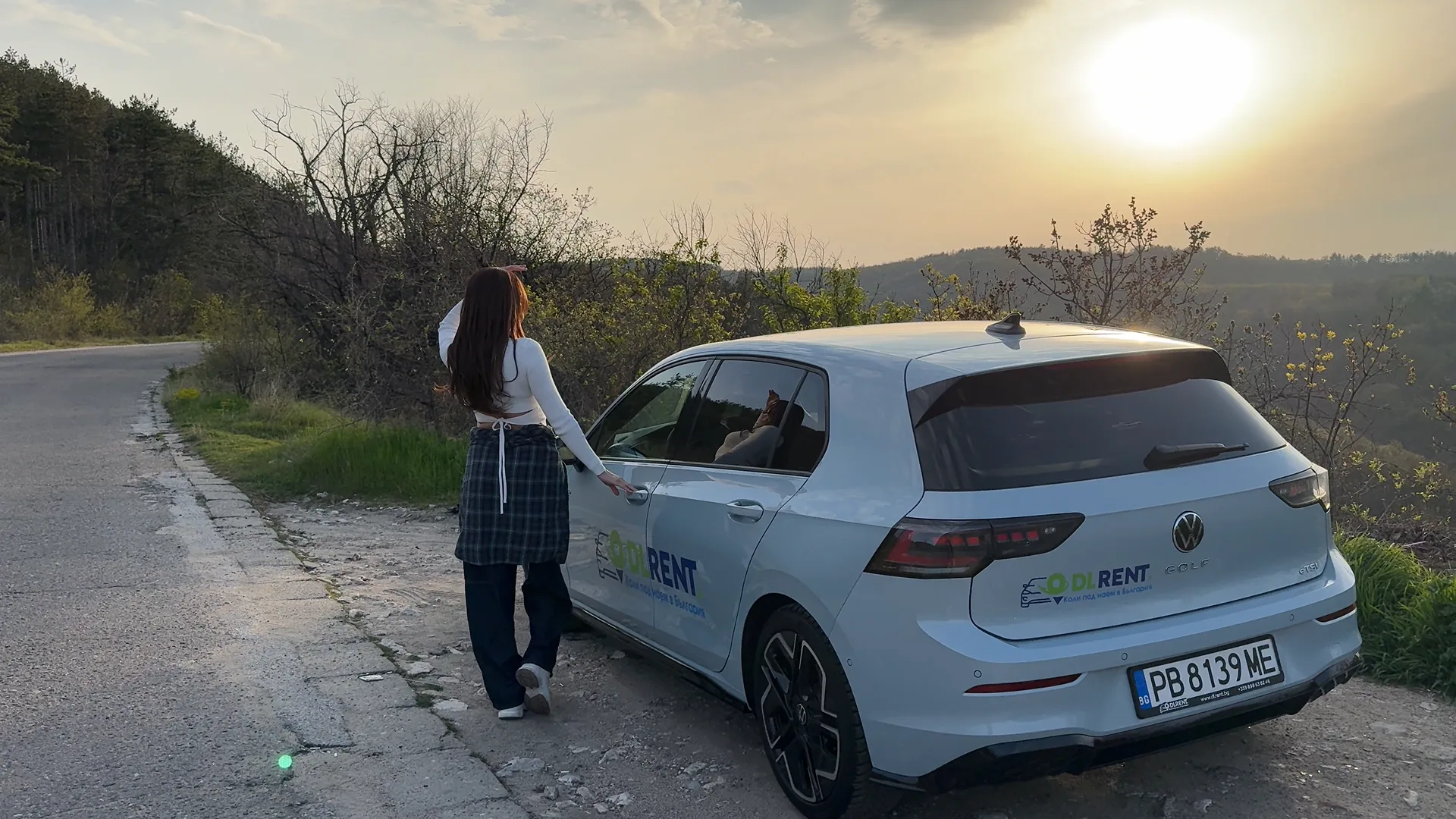

Long-Term Rental or Operating Lease: Which Is More Cost-Effective for a Corporate Fleet
Purchasing a new vehicle usually begins with a plan for the next few years. Sometimes, however, you need a reliable car for a much shorter period - until a business project is completed, for a few months' stay in Bulgaria, for a new employee's probationary period, or while waiting for the delivery of an already ordered new car.
In such situations, committing to a multi-year lease agreement or tying up substantial capital for a purchase carries unnecessary financial risks. The alternative is a monthly rental, which provides you with a vehicle for the exact duration you need it, without commitments for maintenance, insurance, and resale.
Is car rental the more cost-effective choice for your situation, however, or is an operating lease worth opting for? The answer depends on several key factors that we will walk through step by step.
1. Start with the Duration: How Long Will You Need the Vehicle
The first and most important factor in making a choice is the duration of use.
When you plan to drive a car for years, purchasing or leasing makes logical sense. They offer the option to customize equipment to order and compare long-term financing options.
The math is entirely different, however, when the need is temporary:
● Purchasing for a few months: You have to allocate a significant sum, go through registration procedures, and then find a buyer yourself and absorb the loss from the car's rapid depreciation.
● Operating lease: Contracts have a fixed term (usually 36 to 60 months). If you need to return the vehicle early due to a completed project or a team change, you will face penalties.
● Monthly rental from DL Rent: The term is negotiated according to your specific needs, with a minimum period of just 1 month. Extending the rental or returning the car is straightforward and free of penalty fees.
2. The Monthly Installment Doesn't Show the Whole Cost
Once you clarify the required period of use, the next natural step is financial comparison.
When comparing rental and lease offers, the simplest approach is to place the two monthly amounts side by side. However, this often gives an incomplete and misleading picture of your actual budget.
To make the comparison genuinely useful, you need to examine what lies behind the numbers and what each offer includes:
Financial leasing and purchase: You must take into account the down payment, residual value, and expenses beyond the monthly payment - insurance, vignettes, seasonal tires, and servicing are organized and paid for separately by your team. With a full-service lease, these services are typically already included in the installment; in that case, the difference from renting lies mainly in duration and flexibility, not the scope of services.
Rental from DL Rent: All accompanying costs, such as full Casco (comprehensive insurance), Third-Party Liability, vignette, technical maintenance, and seasonal tires, are included in one transparent price.
Important for your budget: The security deposit is also part of preliminary planning. It is separate from the rental price, with its amount and refund conditions agreed upon in advance depending on the selected vehicle.
3. Mileage Can Shift the Choice
Beyond the included services, another key factor directly impacting the final cost is the expected travel intensity.
Before requesting a quote, it is important to estimate how many kilometers you cover in a typical month. Urban commuting to work versus regular business trips across multiple regions result in very different mileage.
In lease contracts, exceeding the pre-agreed annual limit is often charged on a per-kilometer basis at the end of the term.
Here, the standard offer includes 2,500 km per month, with additional mileage calculated at €0.20/km.
Example: If you drive 3,000 km in one month, the extra charge for the 500 km excess will be €100. If you anticipate higher monthly mileage, specify it in your inquiry to receive a tailored quote suited to your routes.
4. When the Car Goes to the Repair Shop, Daily Operations Don't Stop
The true cost of a vehicle becomes apparent when it unexpectedly enters the repair shop. If your leased car stays in the shop for a month following a breakdown or accident, lease payments continue while you are left without transport.
For company cars, this leads to direct losses - postponed meetings, disrupted client visits, or employees unable to perform their duties.
A major advantage of monthly rentals is that we provide roadside assistance and a replacement vehicle across Bulgaria. In the event of a technical issue, you don't have to organize the entire process yourself; we handle maintenance so your business or daily routine never comes to a halt.
5. You Choose a Specific Car, Not Just a "Class"
When you use a vehicle every day for months, trunk capacity, transmission type, fuel type, and long-distance comfort make all the difference.
You select a specific vehicle from our fleet and receive that exact car, not a similar model in the same category. This allows you to evaluate in advance whether the car suits your business routes, urban errands, or family travel:
Compact and economical city cars: Ideal for sales representatives, couriers, and daily urban tasks.
Mid-size and executive business sedans: An excellent solution for management teams, visiting consultants, and corporate travel.
SUVs and 4x4 vehicles: Suitable for teams traveling to sites outside the municipal road network, as well as for the winter season.
Passenger vans and minibuses (8+1): A practical choice for film crews, team-building events, and project teams.
Traveling abroad: If you are planning a business trip or travel outside Bulgaria, specify this before booking. Cross-border travel requires prior approval, a Green Card, and a power of attorney. For the detailed list of required documents, see our article "Company Car Rental: Complete Checklist for Organizing a Business Trip Domestically and Abroad."
6. Lease or Monthly Rental: Which Is Right for Your Business
Based on all these factors, the final choice comes down to your company's profile and planning horizon:
Choose an Operating Lease If:
You have an established corporate structure: You maintain a permanent fleet and a solid 4–5 year financial forecast without anticipated downsizings or restructurings.
You require a specific configuration: You insist on specific vehicles or luxury executive sedans with custom factory equipment built to order.
You have internal resources: You have an in-house fleet manager to handle communication with service centers, insurers, and tire centers.
Choose a Rental If:
You run a project-based or seasonal business: IT companies, construction and engineering firms, film productions, event management, tourism, or agriculture with fluctuating team sizes throughout the year.
You are expanding your team: When hiring new sales reps, service technicians, or managers on probation, you protect your company from multi-year lease commitments before results are proven.
You host international consultants: You need a representative company car for visiting executives, auditors, or investors for a period of several months.
You want to preserve liquidity: Rental installments are recognized as an ongoing operating expense for business use without initial capital outlays, keeping your credit lines free for core operations. The same accounting advantage applies to operating leases, so the choice between the two depends on term length and flexibility, rather than accounting treatment.
Hybrid Approach: The Optimal Solution for a Modern Fleet
Leading companies increasingly adopt a hybrid mobility management model. They maintain a smaller pool of company vehicles for head office ongoing needs, scaling up the fleet through rentals during peak workloads, new projects, or ad-hoc tasks.
When planning executive travel, trade exhibitions, or hosting foreign partners, you can quickly supplement your fleet with curated business travel vehicles.
Conclusion
The most meaningful comparison is between specific quotes for the same duration and a comparable vehicle. When purchasing or leasing, consider total expenditure, included services, projected mileage, and the vehicle's residual value at the end of the term.
Monthly rental is the most cost-effective solution when you need a car here and now, with no reason to take on multi-year commitments. For businesses seeking operational freedom and zero capital expenses, explore our specialized long-term rental offers.
If you want to optimize your corporate fleet expenses today, contact our team to receive a customized quote tailored precisely to your company's needs.
Frequently Asked Questions (FAQ)
1. Can a long-term rental company car be driven by more than one employee without additional fees?
An additional driver can be added to the agreement for a fee of €5 per day, capped at a maximum of 30 days within the rental period. For example, if you rent a vehicle for two months and add a second driver, you will pay a one-time cap of €150 instead of €300 for the entire term.
2. Who covers costs and logistics if the vehicle suffers damage through our employee's fault?
The procedure is streamlined for your team and follows these steps:
Notification: The driver must submit an accident report and photos of the damage within 24 hours of the incident.
Financial Responsibility: The documentation is sent to an authorized repair shop to assess the repair time. You do not pay for the cost of the repair itself, but only for the days the vehicle is out of service (calculated at the daily rental rate or according to special terms in your agreement, if applicable).
Practical Example: If a minor incident causes a cosmetic scratch on the right fender that does not affect safe driving, the car remains in operation for the rest of the contract. It enters the repair shop only after the rental period ends, and you are charged solely for the downtime in the shop (e.g., 3 daily rental fees) as loss of use.
3. Is it possible to switch the vehicle to another class (e.g., from economy to SUV) midway through the rental agreement?
Yes, switching to a vehicle from a different class is completely possible, subject to availability in the DL Rent fleet at the time of your request. Upon switching, the monthly rental rate is recalculated based on the newly selected model and the remaining contract term.
About the Author
Gergana Ivanova, Category B driving instructor and co-founder of DL Rent. With extensive experience in driver training and fleet management, Gergana ensures that DL Rent customers receive transparent service, impeccably maintained vehicles, and complete peace of mind behind the wheel.