
How to Calculate Your Fuel Budget for a Rental Car Trip in Bulgaria
Exploring Bulgaria by rental car – whether for a family holiday, a summer coastal trip, or a business visit – gives you total freedom and easy access to hidden gems off the beaten track. To enjoy a seamless trip without financial surprises, estimating your total expenses in advance is a key part of planning.
When mapping out any itinerary, the key questions are: "How much fuel will I need, what affects real-world fuel consumption, and how do I calculate the total cost in Euros?" In this guide, we break down the universal calculation formula, key factors that influence fuel efficiency, sample driving routes with exact fuel volumes, and practical tips to keep your travel costs down.
Quick Formula to Calculate Your Fuel Budget
To estimate your fuel costs based on current petrol station prices (expressed in Euros per liter), use the following simple formula:
Fuel Budget (€)=Distance in km ÷ 100Average Consumption(L/100 km)Fuel Price(€/L)
Step-by-Step Practical Example
Imagine planning a 500 km road trip using an economical compact car with an average consumption of 6.0 L / 100 km:
Determine the distance factor:
500 km100=5Calculate the total required fuel volume:
56.0L/100 km=30 litersCalculate the financial budget in euro:
Multiply the 30 liters needed by the current price per liter at the fuel station. (For example, with an estimated price of €X per liter, your total cost will be €30X).
Golden Rule for Safety: Always add a 10–15% buffer (both in fuel volume and budget) to your estimate. This margin covers brief city detours for shopping, maneuvering while looking for parking spots, engine idling, or unexpected route diversions due to road maintenance.
Key Factors That Influence Real-World Fuel Consumption
Actual fuel consumption rarely matches 100% of the baseline figures declared by car manufacturers under laboratory conditions. On real Bulgarian roads, several key factors impact fuel economy:
1. Route Types and Driving Conditions in Bulgaria
Bulgaria’s diverse geography directly impacts fuel consumption:
Highway Driving (Trakia A1, Struma A3, Hemus A2 Highways): Driving at the national highway speed limit of 140 km/h increases aerodynamic drag exponentially. Cruising at 110–120 km/h instead reduces fuel consumption by up to 15–20%.
Mountainous Roads and Incline (Rhodope, Rila, Pirin, Balkan Mountains): Frequent climbs, tight bends, and driving in lower gears put extra demand on the engine. Even though downhill coasting reduces fuel intake, overall consumption in mountain regions is roughly 20–30% higher than on flat terrain.
City Traffic (Sofia, Plovdiv, Varna, Burgas): Peak-hour rush traffic, frequent stoplights, and searching for parking involve constant stop-and-go driving – the least fuel-efficient state for any internal combustion engine.
2. Payload, Luggage, and Aerodynamics
Vehicle weight directly impacts fuel efficiency:
Every 50 kg of additional weight (passengers, luggage, sports equipment) increases fuel consumption by 1% to 2%.
Roof boxes or bike racks disrupt the vehicle's aerodynamics and can boost highway fuel consumption by more than 10–15%.
3. Weather Conditions and Air Conditioning
Summer Months: Running the air conditioner continuously in hot weather adds between 0.5 and 1.0 liter of fuel per 100 km.
Winter Season: Cold engine starts, cabin heating, heated seats, and higher rolling resistance from winter tires increase average fuel consumption by 10–15%.
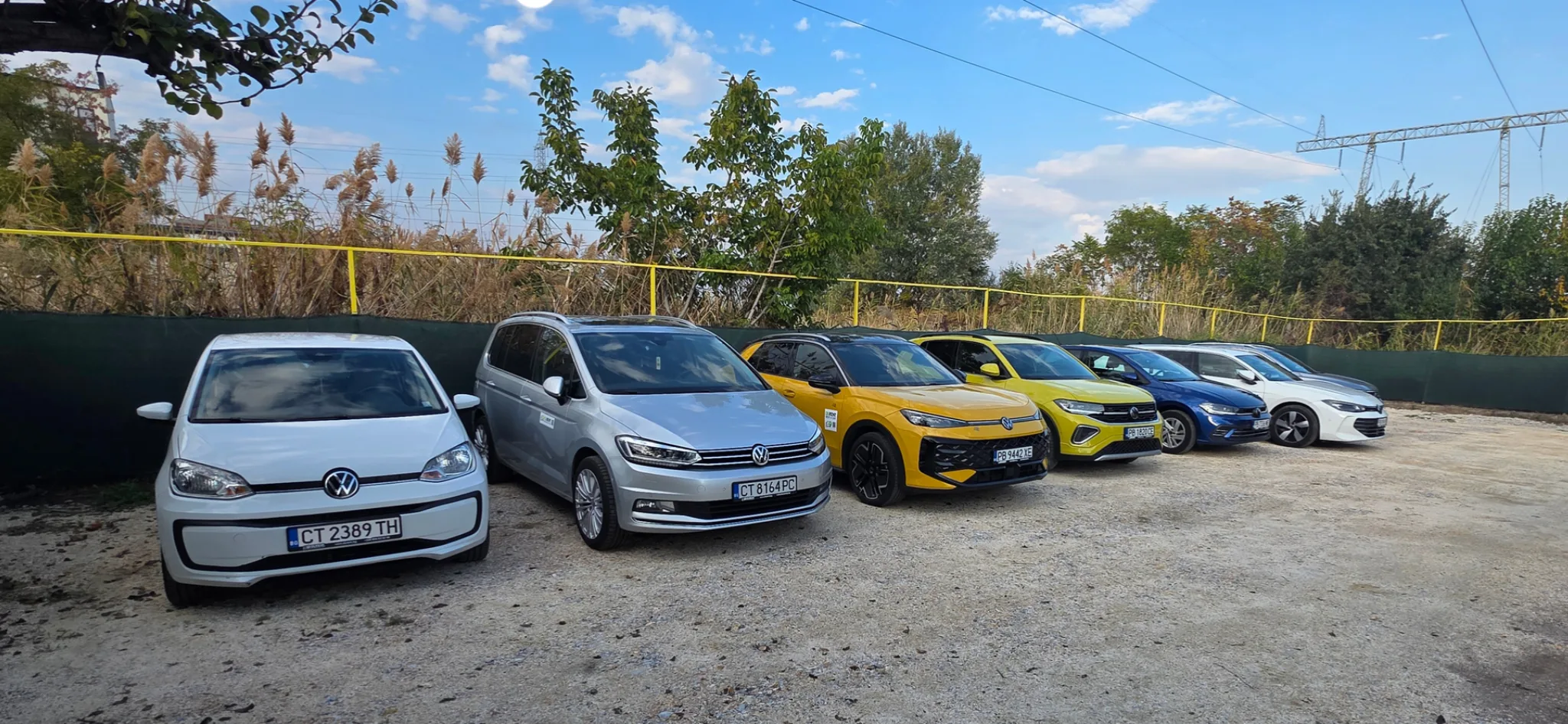
VW Up, VW Polo
Ideal for couples, solo travelers, and light luggage. Easy to park in cities with low fuel consumption.
~5.0 – 6.0 L / 100 km
VW Taigo, VW T-Cross
Compact SUV / Crossover
Great balance of city maneuverability and elevated driving position for better highway visibility.
Avg. Consumption: ~5.8 – 6.8 L / 100 km
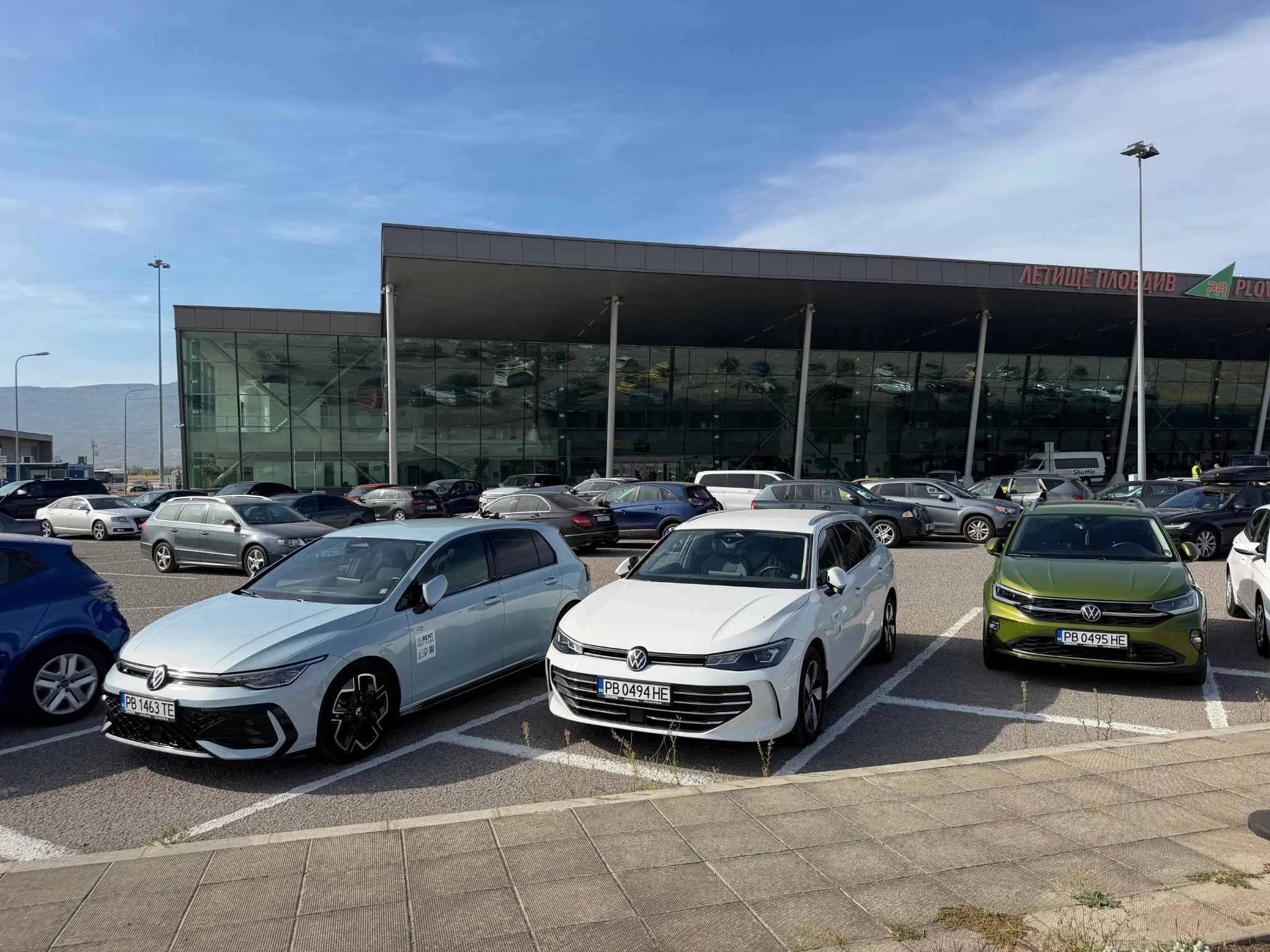
VW T-Roc, VW Passat
Family SUV / Estate
Large trunk, plenty of room for child seats, and maximum comfort on long family road trips.
Avg. Consumption: ~6.5 – 7.8 L / 100 km
VW Transporter
Passenger Van (8+1 / 9-Seater)
The perfect choice for large groups, friends traveling together, or families with heavy luggage and sports gear.
Avg. Consumption: ~7.5 – 9.0 L / 100 km
The DL Rent Advantage: You receive the exact vehicle model you select when booking. This allows you to check the engine size, transmission, and real specifications in advance, helping you plan your fuel budget with maximum precision.
Popular Driving Routes in Bulgaria: Estimated Fuel Needed
To give you a clear picture of what to expect on popular tourist and business routes across Bulgaria, here are estimated fuel requirements in liters. To calculate the final cost in Euros, simply multiply the liters by the current pump price:
Route 1: Sofia – Plovdiv – Sofia (Round Trip)
Total Distance: ~300 km (primarily highway driving via Trakia A1)
Economy Car (Hyundai i20 / VW Polo): ~16.5 – 18.0 liters
Family SUV (Hyundai Tucson / VW Tiguan): ~21.0 – 23.4 liters
Route 2: Sofia – Burgas – Sofia (Summer Family Holiday)
Total Distance: ~720 km (direct highway route)
Economy Car: ~39.6 – 43.2 liters
Family SUV: ~50.4 – 56.1 liters
Route 3: Plovdiv Airport – Pamporovo – Plovdiv Airport (Winter Ski Trip)
Total Distance: ~170 km (mountainous road with steep climbs)
Economy Car: ~10.5 – 12.0 liters
Family SUV: ~13.5 – 15.3 liters
Route 4: Grand Bulgaria Tour (Sofia – Veliko Tarnovo – Varna – Burgas – Plovdiv – Sofia)
Total Distance: ~1,150 km (mixed conditions: highway, country roads, and city driving)
Economy Car: ~63.0 – 69.0 liters
Family SUV: ~80.5 – 89.7 liters
Practical Tips to Save Fuel on Your Trip
Maintain a Steady, Moderate Speed: Cruising at 110–120 km/h on the highway instead of 140 km/h can reduce fuel consumption by up to 15–20%, adding only a few minutes to your overall travel time.
Use Cruise Control: On flat highway stretches, cruise control eliminates subtle foot micro-accelerations and maintains optimal fuel flow.
Drive Smoothly and Anticipate Traffic: Avoid harsh acceleration and last-minute braking. Take advantage of engine braking when coasting downhill or approaching traffic signals.
Check Tire Pressure: Under-inflated tires increase rolling resistance. All DL Rent vehicles undergo thorough tire pressure checks prior to handover.
Return the Car with a Full Tank: DL Rent vehicles are handed over with a full tank of fuel – simply return the car with a full tank to avoid refueling fees. Keep your final gas station receipt as proof of fill-up.
Choose Modern, Efficient Fleet Vehicles: Newer vehicles equipped with Euro 6 engines and modern automatic transmissions feature optimized gear ratios, Stop-Start system, and efficient combustion management.
A great road trip through Bulgaria requires a dependable car and straightforward terms. At DL Rent, we operate with zero hidden clauses and no extra airport pickup fees at Sofia and Plovdiv airports. You reserve the exact new vehicle (VW or Hyundai) featuring factory-tested low fuel consumption, full insurance cover, and 24/7 roadside assistance, allowing you to focus entirely on enjoying your journey.
Ready for Your Next Road Trip?
Plan your route with confidence, calculate your fuel budget, and enjoy the freedom of exploring Bulgaria by car. Browse our fleet and book your rental vehicle online today!
About the Author
Gergana Ivanova – Category B Driving Instructor & Co-founder of DL Rent.
With extensive experience in driver training and fleet management, Gergana ensures that DL Rent customers receive transparent service, impeccably maintained vehicles, and complete peace of mind on the road.